There was a time when dreaming was natural.
Not as an escape, but as a way of seeing clearly.
Somewhere along the way, we learned to silence that instinct, replacing purpose with function, and meaning with movement.
And yet, every so often, someone remembers.
They pause. They question. They begin to realign with what truly matters.
Because when even one human reconnects with their purpose, something shifts.
And when that shift happens often enough, the world begins, quietly, to change.
NaturallyDifferent was born for those who remember.
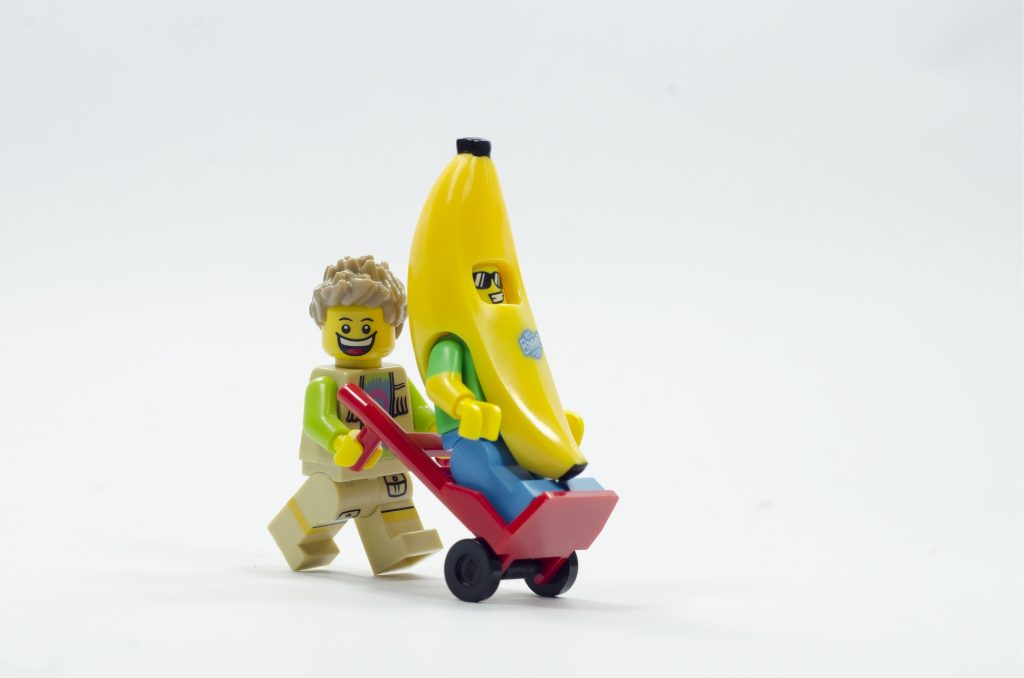
Play is not entertainment. It is a fundamental human capacity.
From early childhood to adulthood, play is how humans learn to relate to the world. It is how we explore safely, test hypotheses, and build meaning through experience.
Research in neuroscience, psychology, and education consistently shows that play strengthens learning, memory, creativity, and emotional regulation. It supports cognitive flexibility, namely the ability to adapt when conditions change.
For children, play is the primary language of development. It shapes confidence, empathy, problem-solving, and the sense of self. Through play, children learn not only what to think, but how to think.
For adults, play reopens access to curiosity and intrinsic motivation. It creates psychological safety, enabling honest dialogue and better decisions.
In teams and organizations, play unlocks collective intelligence and it allows experimentation without fear of immediate judgment. Failure becomes information, not a verdict. Complexity becomes approachable, not overwhelming.
In a world driven by efficiency and performance, play rehumanizes systems. It reconnects people to purpose, agency, and imagination.
Play is not the opposite of seriousness. It is what makes serious work possible.
At NaturallyDifferent, play is a pillar because it is how growth stays alive. It is how learning becomes embodied. And how individuals and organizations move forward—fully engaged, resilient, and human.
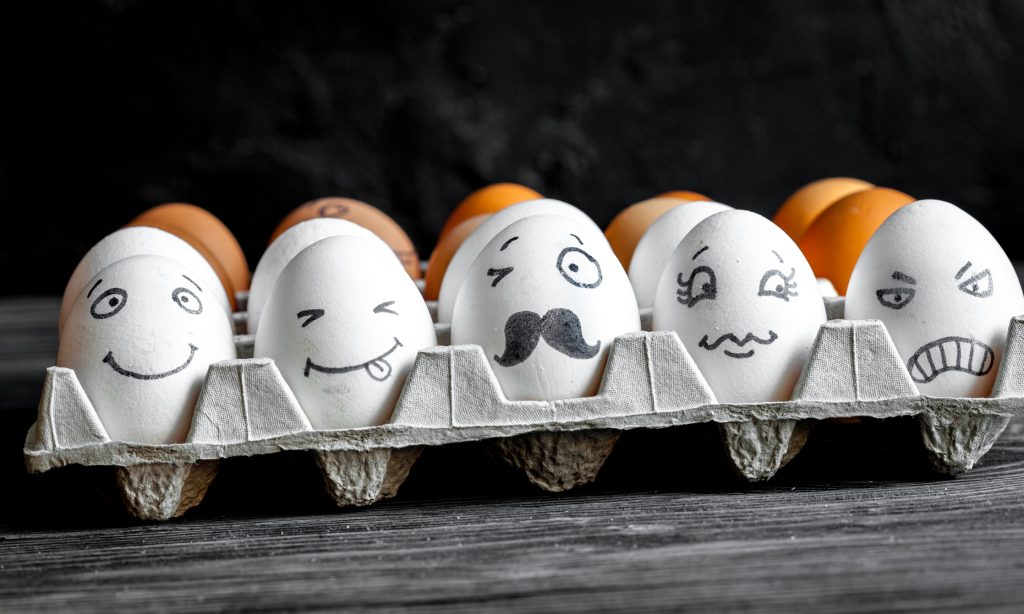
Emotions are not noise in the system. They are the system.
Every decision, action, and relationship is shaped by emotions, whether acknowledged or not. Cognitive science shows that reasoning without emotion is not neutral; it is impaired.
Emotions guide attention, memory, and priorities. They determine what feels important, urgent, or worth engaging with. As articulated by Riders & Elephants, humans are driven by an emotional “elephant,” while rational thought often follows as the “rider.” Ignoring the elephant does not make decisions more rational, it just makes them less conscious.
In children, emotional literacy is foundational to learning, resilience, and social development. Naming and regulating emotions builds confidence and empathy.
In adults, emotions shape leadership, trust, and collaboration. Instead, unspoken emotions accumulate as friction, disengagement, or resistance.
In organizations, emotional culture determines how people behave when no one is watching. It influences safety, accountability, and the capacity to change.
Working with emotions makes complexity manageable. It transforms reactions into choices. Emotions are data. They signal needs, values, and misalignment.
At NaturallyDifferent, emotions are a pillar because sustainable growth requires emotional clarity.
When emotions are acknowledged and integrated, thinking sharpens, relationships deepen, and decisions improve. Not in spite of our humanity, but through it.

Food is one of the first relationships we form. Long before we reason, we respond to nourishment.
What we eat does not simply sustain us. It teaches our bodies how to function. Energy, clarity, mood, and resilience are shaped quietly, meal after meal. Modern science now confirms what many traditions have long known: food is information, and the body listens. The quality of what we consume influences inflammation, immunity, and metabolic balance. It affects how we focus, how we recover, and how we engage with the world. When nourishment is aligned, the body frees up capacity. Thinking becomes clearer. Presence becomes easier.
Food also sets rhythm. It structures days, gatherings, and transitions. Around a table, attention slows. Conversation deepens. Connection emerges naturally.
On the contrary, in environments driven by speed and performance, nourishment is often reduced to logistics. Yet sustained performance cannot exist without sustained care.
Food, approached consciously, becomes preventive medicine. Not through restriction or control, but through quality and intention.
At NaturallyDifferent, food is a pillar because health is not an afterthought. It is the ground on which energy, clarity, and human potential can endure.
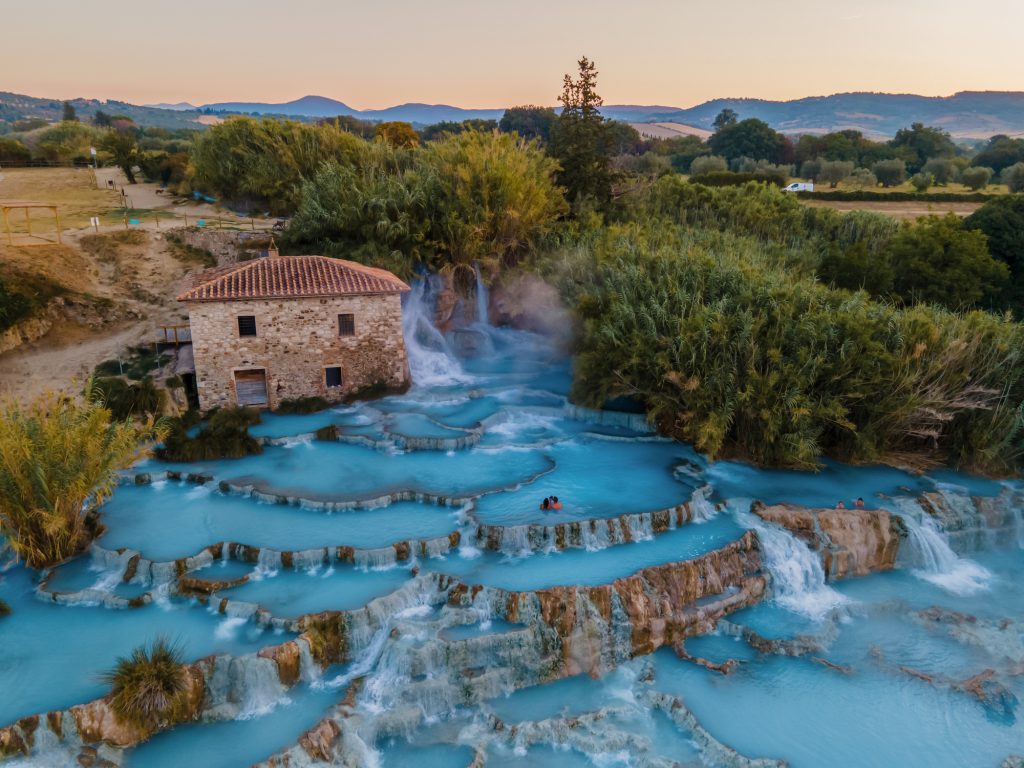
Nurture begins where effort pauses. Not as a withdrawal, but as a necessary shift.
When attention moves away from output, the body often speaks first: through breath, tension, or fatigue. Nurture is the act of listening before pushing further.
Spend time in a forest, and something subtle shifts. Breathing slows. Shoulders drop. Attention widens. Without instruction or effort, the nervous system settles and mental clarity returns.
Step into water, and the effect is immediate in a different way. Temperature sharpens awareness. Movement becomes slower, more deliberate. Whether through immersion, contrast, or simple contact, the body recalibrates.
Thoughts quiet. Sensations take the lead. What feels instinctive is deeply regulating.
These moments are not escapes from reality. They are ways back into it. As the system settles, clarity returns, and decisions become less reactive, more grounded.
In cultures that value endurance but postpone recovery, nurture is often delayed. Yet without it, sustainability erodes quietly.
At NaturallyDifferent, nurture is a pillar because growth needs care to endure. Not as a luxury, but as the condition that allows humans and systems to remain present, resilient, and capable over time.
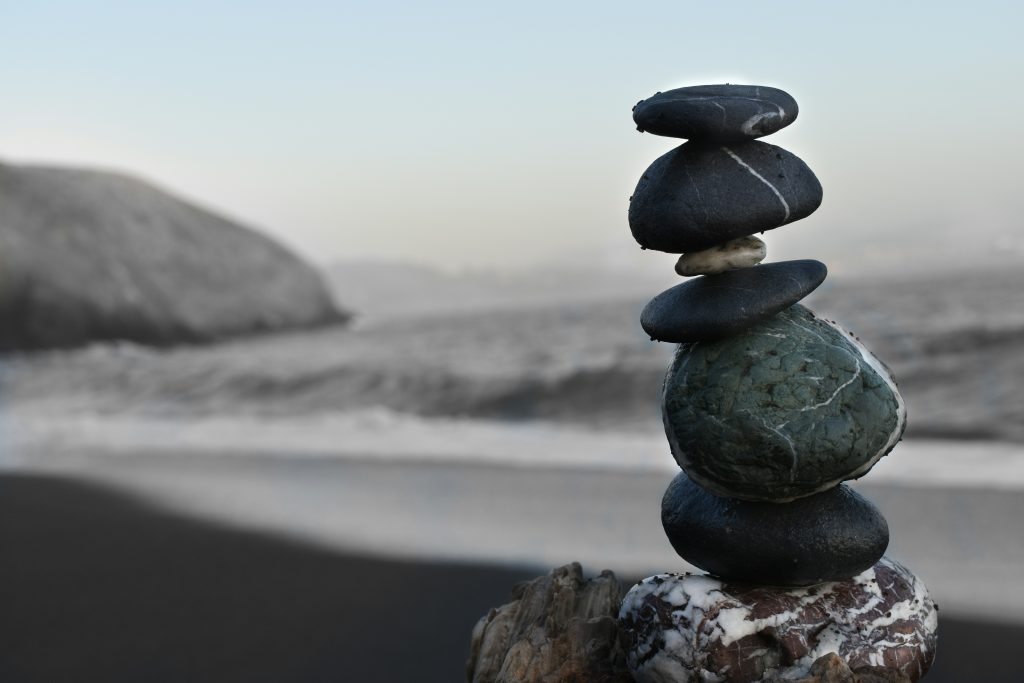
Reflection begins when action slows. Not to stop moving, but to regain direction.
In fast-moving environments, momentum is often mistaken for progress. Reflection creates the pause where meaning can surface.
Sit quietly for a few minutes, and patterns start to appear. Thoughts repeat. Emotions signal. What was blurred by speed becomes visible. Mindfulness and meditation do not add information. They remove noise. Through simple attention to breath, posture, or sensation, the mind settles. Awareness widens without effort.
Reading works in a different register. It introduces distance, another voice, another frame. It allows ideas to mature before being acted upon.
Together, these practices train discernment. They help distinguish what matters from what merely demands attention. Reflection turns experience into learning. Without it, events accumulate but insight does not. It is in reflection that alignment is tested. Between intention and action. Between values and decisions.
In cultures driven by immediacy, reflection is often postponed. Yet clarity cannot be rushed.
At NaturallyDifferent, reflection is a pillar because direction precedes execution. Not as withdrawal from action—but as what gives action depth, coherence, and lasting meaning.
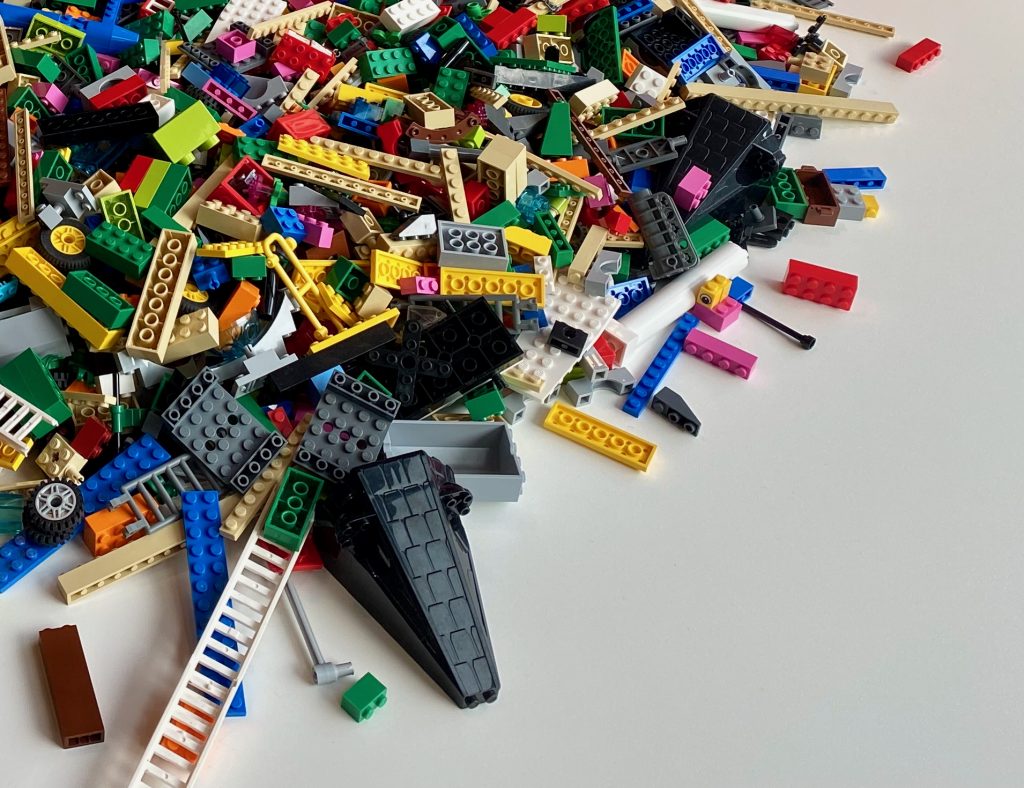
LEGO® SERIOUS PLAY® often begins in a deceptively simple way: a table, a question, a box of bricks, and a group of people asked to build.
At first, there is hesitation. Then hands start moving. And something shifts.
As fingers select pieces and structures take shape, thinking follows. Not abstract, not rehearsed, but grounded in experience. What participants build is rarely what they expected to say. Yet it is often closer to what they truly know.
The methodology rests on a fundamental insight from cognitive science: we think with more than our minds. Hands, senses, and emotion are part of reasoning. By building in three dimensions, ideas become tangible. Strategy stops floating in language and takes form. Assumptions become visible. Connections can be pointed at, not argued about.
In a LEGO® SERIOUS PLAY® session, everyone builds. This is not symbolic. It changes the social dynamic. There are no observers and no spectators. Hierarchy softens because contribution is physical and shared. When participants explain their models, stories emerge naturally. Not as performance, but as sense-making. People often hear themselves say things they did not know they knew.
The pace is deliberate. Questions are carefully framed. Time is given for reflection through action. Complex issues—identity, purpose, strategy, tension—are approached indirectly. And precisely because of that, they become easier to engage with. The bricks act as mediators. They hold ideas safely outside the person. This makes dialogue more honest and less defensive.
As models are combined, a collective landscape appears. Individual perspectives connect into a shared system. What belongs to whom becomes less important than what belongs together. Decisions that follow are different. They are rooted in shared understanding, not compromise.
LEGO® SERIOUS PLAY® does not simplify complexity. It makes it workable.
It does not seek quick answers.It creates the conditions for better ones to emerge.
At NaturallyDifferent, this methodology matters because it aligns thinking, feeling, and doing. It transforms conversation into construction. And it allows individuals and organizations to face what matters—clearly, collectively, and with integrity.
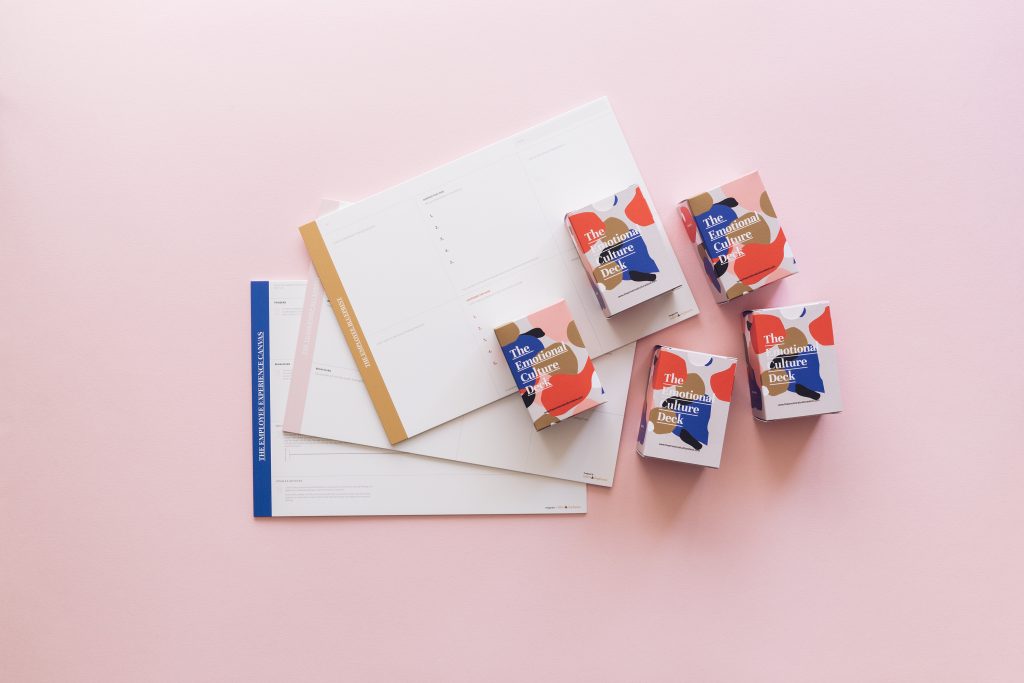
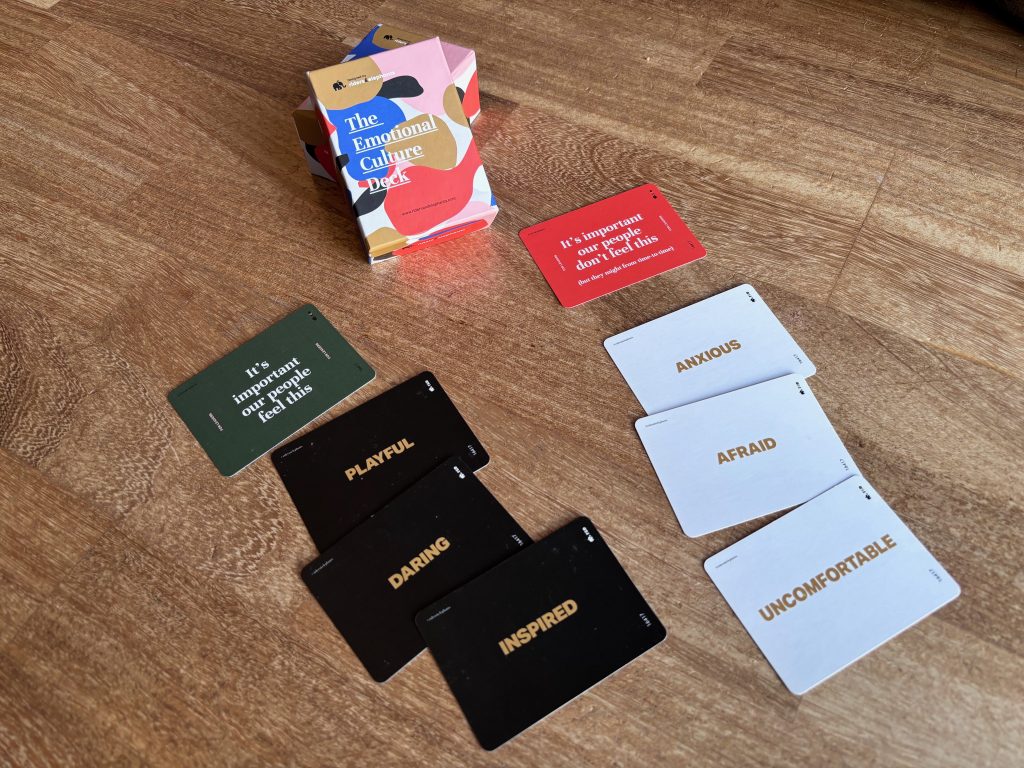
The Emotional Culture Deck often enters a room quietly. A set of cards on a table rarely signals what is about to unfold.
People are used to talking about work. They are far less used to talking about how work feels. Yet emotions are always present, guiding attention, shaping decisions, influencing behavior. Whether named or ignored, they drive the system.
The Emotional Culture Deck was designed to make this invisible layer visible. Not through therapy, and not through abstraction, but through language people can access. Each card carries an emotion. Not simplified, not diluted. Precise, human, recognizable.
When participants are invited to choose, something happens. Hands hesitate. Then select. Then explain. What emerges is rarely dramatic. It is often simple, grounded, and deeply revealing. People discover that naming emotions creates distance without disconnection. The feeling is no longer who I am. It becomes what I experience. This shift is critical. It transforms reaction into reflection.
Behavioral science, including the work of Riders & Elephants, shows that emotions lead and cognition follows. Ignoring emotions does not make environments more rational. It makes them less conscious.
The Deck offers a shared vocabulary. And with vocabulary comes permission. Permission to say what is usually filtered out. Permission to acknowledge tension without assigning blame.
In teams, this changes everything. Unspoken emotions stop leaking into sarcasm, avoidance, or disengagement. They can be worked with directly.
As a facilitator, one feels the room slow down. Listening improves. Defensiveness drops.
Because the cards hold the emotion, not the person. They act as neutral mediators.
Conversations move from opinions to experiences. From positions to underlying needs. Over time, patterns appear. Certain emotions dominate. Others are missing entirely. This is emotional culture made tangible. Not as a slogan, but as a lived reality. Leaders begin to see how systems shape feelings. And how feelings, in turn, shape outcomes.
The Emotional Culture Deck does not promise comfort. It offers clarity.
It does not resolve complexity. It allows it to be named and navigated.
At NaturallyDifferent, this methodology is foundational because sustainable performance requires emotional literacy. When emotions are acknowledged and shared, trust deepens and decisions gain quality. Not despite being human, but because emotions are the most human data we have.
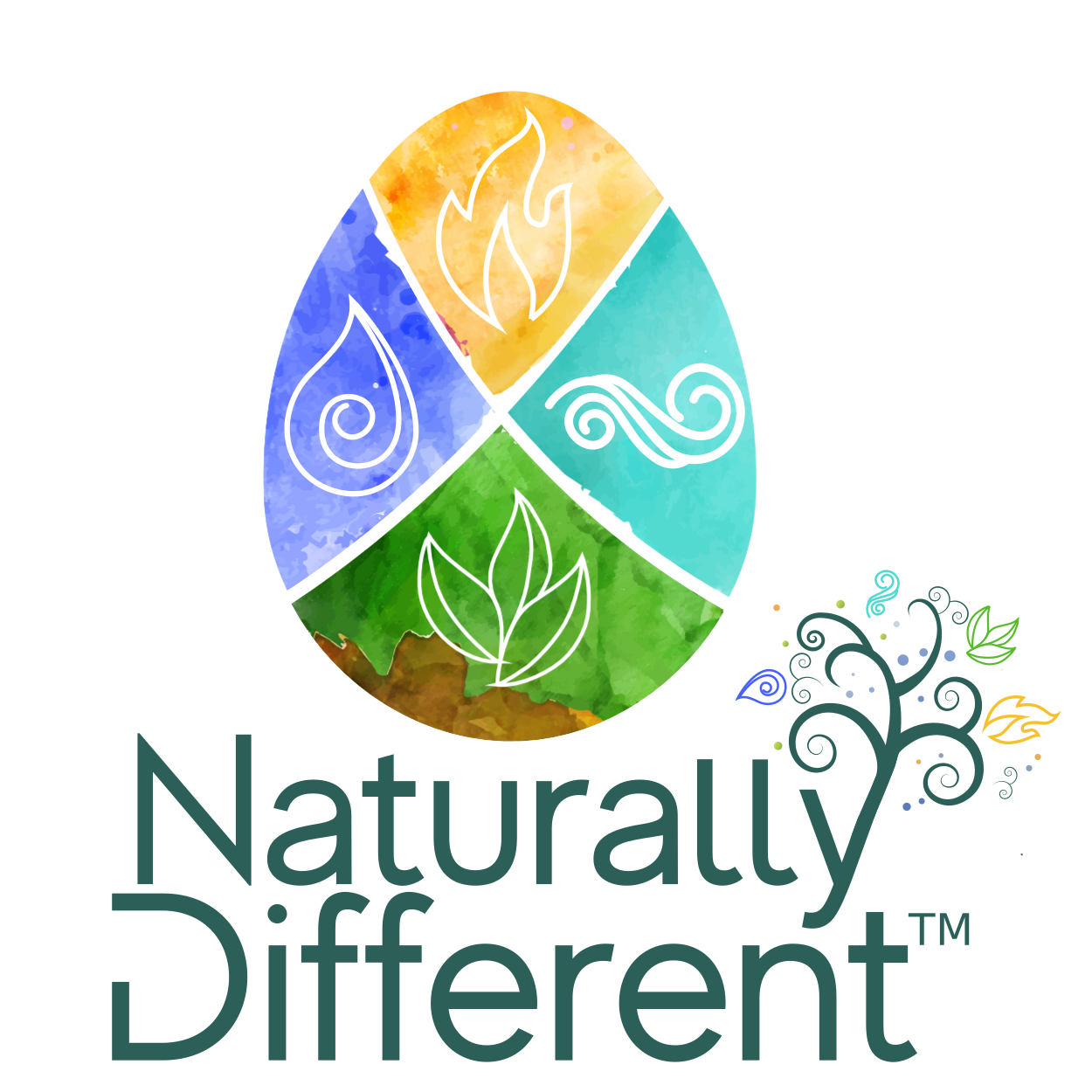
At NaturallyDifferent, people do not step into a program. They enter a carefully prepared environment. The five pillars set the ground—play to open exploration, emotions to bring truth, food to sustain energy, nurture to restore balance, and reflection to give direction. The two methodologies shape how people move within that space, making thinking tangible and emotions speakable.
From this combination, certain qualities begin to surface naturally. Imagination awakens in relation to others. Play brings lightness, precision brings clarity, and creativity becomes something shared and usable. As attention deepens, awareness of self and others sharpens. Empathy grows through connection rather than instruction, and culture is lived rather than declared. Energy settles. Balance replaces oscillation. Nourishment supports vitality over time. Care appears quietly, through self-respect, craft, and small acts repeated with intention. Health becomes a practice embedded in everyday choices. Emotions are welcomed. Humanity becomes visible. Trust builds, and loyalty follows naturally. Time slows enough for reflection to take place. Experience turns into discovery, and growth gains meaning. Moments of flow emerge. Restoration happens. A sense of harmony returns. The tone softens. Gentleness allows presence, acceptance, and compassion. Immersion follows. Belonging is felt.
Something new begins. What remains is warmth. In light gestures, in care, in kindness.
This is what participants experience—not a sequence of techniques, but a coherent whole. An atmosphere where people and organizations can unfold with clarity, dignity, and care.

Creativity.
Imagination. Connection. Precision. Play.
Empathy.
Awareness. Connection. Culture. Growth.

Nourishment.
Balance. Healing. Prevention. Vitality.
Health.
(Self)-Love. Craft. Culture. Care.

Experience.
Emotion. Humanity. Trust. Loyalty.
Reflection.
Discovery. Imagination. Growth. Fulfillment.
Purity.
Flow. Restoration. Harmony. Well-being.
Gentleness.
Acceptance. Self-care. Presence. Compassion.


Immersion.
Awareness. Belonging. Balance. Rebirth.
Warmth.
Light. Grace. Care. Kindness